All articles
TikTok's New Sequential Ad Format Changes What Counts as a Single Impression
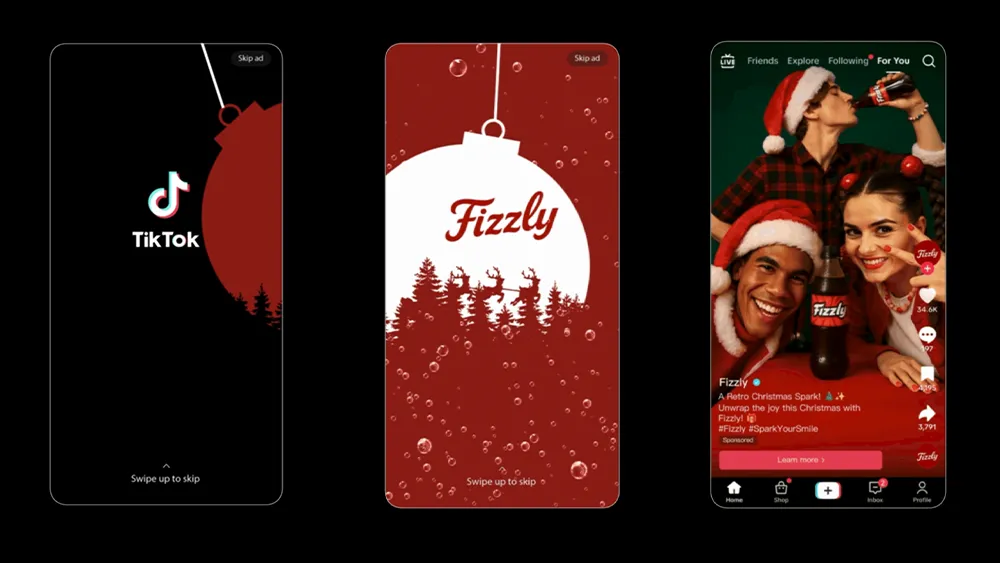
Prime Time delivers up to three ads from one brand to the same user within 15 minutes, introducing narrative sequencing as a buying unit and forcing a rethink of how campaigns are measured.

At the 2026 IAB NewFronts, TikTok introduced Prime Time, a sequential ad format that allows brands to deliver up to three distinct ads to the same user within a designated 15-minute window. The format targets tentpole moments — live events, product launches, and high-engagement periods — where sustained brand presence across multiple placements matters more than a single impression. It was one of several new ad products unveiled at the platform's first NewFronts appearance since completing its U.S. ownership transition.
From impressions to arcs: The traditional social ad buy assumes each impression is independent. Prime Time introduces sequencing as a deliberate unit. Three ads delivered in 15 minutes create something closer to a commercial break than a feed interruption — a narrative structure where the first ad sets context, the second builds, and the third resolves. Enterprise video platforms have been applying similar sequencing logic to webinars and brand events through tools like Brandlive's Showbuilder, which plans productions as shot-by-shot narrative arcs rather than slide decks. That changes the creative brief, but it also changes the measurement brief. Evaluating a three-part sequence by averaging individual ad metrics misses the point entirely. The value lives in the cumulative effect, and most reporting dashboards aren't built to capture it.
The platform context: TikTok launched Prime Time alongside Logo Takeover (brand co-branding on the app's splash screen), TopReach (a bundled buy of the first two ad placements users see), and expanded Pulse placements that align ads with trending conversations and curated creators. Warner Bros. tested Logo Takeover for the upcoming Supergirl release and, according to TikTok, reported double-digit lifts in brand awareness and purchase intent. Taken together, the announcements signal that TikTok is restructuring its advertising pitch around what Axios described as attention architecture — timed sequencing, first-open dominance, and creator-led credibility — rather than incremental feed placement.
A broader pattern: TikTok isn't alone in moving toward sequenced delivery. Meta's Advantage+ ecosystem is evolving toward AI-orchestrated campaigns where the platform dynamically shapes how ads unfold based on user behavior. The implication is that the unit of persuasion is no longer the ad — it is the sequence. Media planners accustomed to buying discrete placements now have to think about rhythm, pacing, and narrative progression across multiple exposures within a single session.
The measurement challenge this introduces is meaningful. A three-part ad sequence may underperform a standalone ad on per-impression CTR while significantly outperforming it on brand recall, consideration, and downstream conversion. Proving that requires measurement models that track cumulative exposure effects, not just individual ad events. The brands and agencies that build those models early — connecting sequential exposure to brand lift and pipeline movement over time — will have a clearer picture of what's working. Everyone else will be averaging metrics that no longer describe the thing they're actually buying.