All articles
OpenAI Shuts Down Sora Six Months After Launch, and Disney's $1 Billion Deal Goes With It
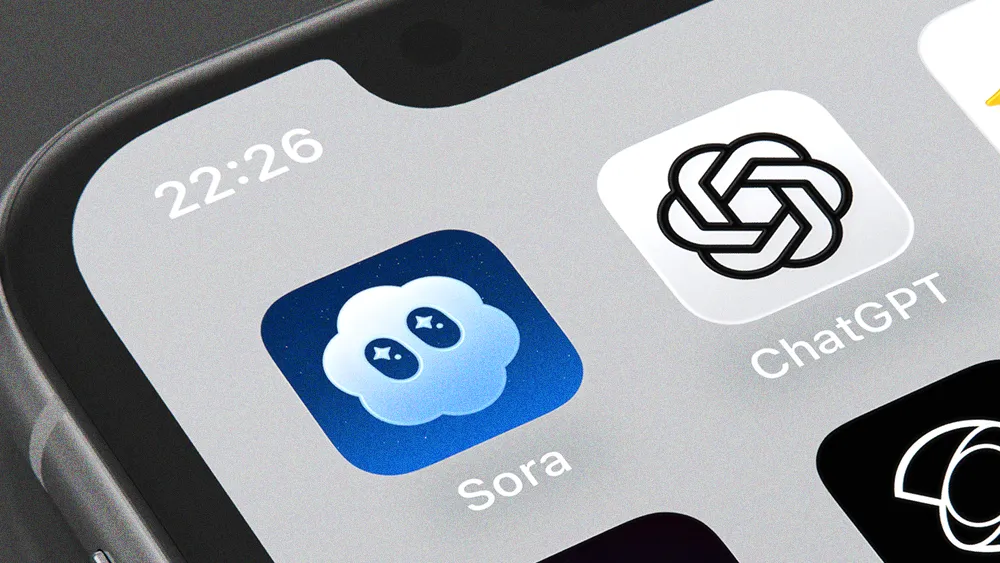
The most prominent AI video generation tool is being discontinued, and the planned licensing arrangement with Disney has collapsed before money changed hands, sending a signal about the economics and limits of consumer-facing generative video.

OpenAI announced on March 24 that it will discontinue Sora, the text-to-video generation tool it had positioned as a landmark product just six months earlier. The Sora app will shut down on April 26, with API access continuing through September 24. In parallel, Disney confirmed that the $1 billion investment and character licensing arrangement it had announced in December 2025 — covering more than 200 characters from Disney, Marvel, Pixar, and Star Wars — will not move forward. No money changed hands before the deal collapsed.
The economics didn't hold. CEO Sam Altman told Laurie Segall's "Mostly Human" podcast that the decision came down to resource allocation: "We have to concentrate our compute and our product capacity into these next generation of automated researchers and companies." Multiple reports citing a Wall Street Journal investigation described daily operating costs of approximately $1 million, a user base that reportedly dropped from over one million at launch to below 500,000, and an IPO timeline that favors recurring enterprise revenue over consumer experiments. Sora reached number one on the iOS App Store in its first week. Sustained engagement never followed.
Disney was blindsided. Reuters reported that Disney's team learned of the shutdown less than an hour before the public announcement — just 30 minutes after a meeting in which the two companies were actively collaborating on a Sora-related project. The deal had been structured as a three-year arrangement: Disney would license masked, animated, and creature characters for fan-created videos on Sora, with curated selections appearing on Disney+. The broader partnership included Disney becoming a major OpenAI customer, using APIs across its services, and deploying ChatGPT enterprise-wide. A Disney spokesperson said the company "respects OpenAI's decision to exit the video generation business." Altman later acknowledged to Variety that he "felt terrible" delivering the news to Disney CEO Josh D'Amaro.
The copyright overhang: Legal and reputational pressure accelerated the shutdown timeline. Users quickly discovered they could generate videos featuring recognizable celebrities, copyrighted characters, and branded content. Initial opt-out policies put the burden on rights holders to request exclusion rather than on OpenAI to prevent unauthorized use. Tighter guardrails introduced in early 2026 reduced infringement but also increased user frustration, contributing to the engagement decline that made the product economically unviable. Daoud Jackson, Senior Analyst at IBC, noted that "AI video generation tools like Sora are not only incredibly expensive in terms of compute but also risk massive reputational damage through deepfakes" and "do not appear to drive sustainable user engagement as chatbots have."
The shutdown leaves Google as the only remaining player in AI video generation with meaningful scale — a position complicated by its own ongoing lawsuits with IP holders. For marketing teams that had been watching generative video tools as a potential production shortcut, the Sora shutdown underscores a practical reality: platform-dependent creative capabilities can disappear with a single business decision. The brands that built internal production infrastructure, invested in human creative talent, and treated AI tools as supplements to an existing capability rather than replacements for it are in a fundamentally different position than those that were waiting for the tools to mature. Companies like Blueprint Medicines, which invested in production-quality branded events through partners like Brandlive Studios, own a creative capability that doesn't hinge on any single platform's survival.