All articles
Three Brand Moves Show That Radical Honesty is Becoming the Dominant Creative Strategy of 2026
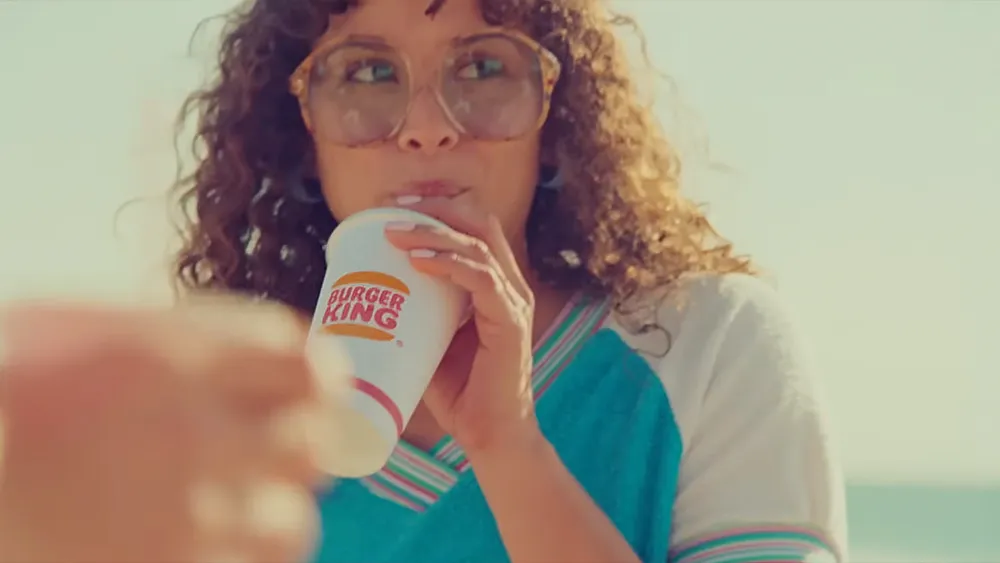
Burger King admitted it "fell off." Aerie pledged to reject AI imagery. Diageo made culture a board-level priority. The connecting thread is a bet that transparency outperforms polish.

In the span of three weeks, three unrelated brand moves landed in quick succession and pointed in the same direction. Burger King aired a 90-second ad during the Oscars on March 15 that opened with the line "fast food just fell off, us included" before publicly firing the King mascot that had been part of the brand's marketing for two decades. Aerie launched a campaign starring Pamela Anderson on March 27 built around the tagline "You can't prompt this." And across the broader market, companies from Diageo to Abercrombie & Fitch have been moving toward storytelling channels that prioritize human presence over algorithmic reach.
The confession as brand strategy: Burger King's ad didn't just retire a mascot — it narrated the brand's own decline. CMO Joel Yashinsky told Marketing Dive that the King mascot had been "off-putting and polarizing" for a significant consumer segment and had driven the brand away from the kids and family business entirely. The ad acknowledged slow service, outdated restaurants, and simple mistakes, then framed the customer as the replacement. The campaign, created by BarkleyOKRP and launched during a telecast that drew 17.9 million viewers, according to Hollywood Reporter, amounts to a public apology backed by significant operational investment — a multi-year restructuring plan, a reformulated Whopper, and the president's personal phone number handed out to consumers for direct feedback.
Authenticity as creative execution: Aerie's 60-second spot opens inside a stark AI interface, with Anderson prompting the system to generate models. Each output appears instantly but feels lifeless. Anderson's frustration builds until she demands the system "make them feel real" — and the artificial setting dissolves into a live Aerie shoot full of energy and motion. The creative was directed by Gemma Warren with agency Shadow, as Retail Dive reported, and is running across YouTube, Netflix, Hulu, Disney+, Amazon Prime, and HBO. Since introducing its anti-AI stance in October, the brand has reported a 21% increase in brand awareness and a 9% year-over-year increase in comparable sales.
Culture as commercial input: The broader market is moving in the same direction. Across the industry, executives at companies like Diageo have begun framing culture as a core strategic function, treating authenticity as a competitive input with commercial consequences rather than a marketing overlay. EY's 2026 media trends report calls authenticity "the rarest asset" in media, and Gartner forecasts that half of consumers already prefer brands that keep generative AI out of customer-facing content. Major brands are simultaneously exploring channels like Substack, Discord, and Reddit as part of what Marketing Dive described as a "human-powered brand building" strategy. The market is beginning to assign measurable value to visible human signals — executive presence, unscripted interactions, community engagement — that were previously filed under brand-building.
What connects these moves is a willingness to lead with imperfection and bet that audiences reward it. Burger King admitted operational failures. Aerie dramatized the limitations of AI. And across the broader market, major brands are actively investing in storytelling formats that put human presence front and center. None of these positions are risk-free — radical honesty invites scrutiny, and a confession without follow-through becomes a liability. But the early results suggest that in a content environment saturated with polished, optimized, and increasingly AI-generated output, the brands earning attention in 2026 are the ones demonstrating that a real person is making decisions on the other side. The growing investment in live video formats and broadcast-grade production services for brand content reflects that same logic: audiences are gravitating toward moments that can't be faked, and the infrastructure to deliver them is being built accordingly.