All articles
How Betclic Reframed Its Sports Betting Brand As Entertainment Through Long-Form Documentaries
Ricardo Malaquias, Campaign & Creative Manager at Betclic Group, runs the brand like a production studio and turns sports documentaries into real-world impact for clubs and creators.
Every brand is doing the same thing and talking the same way. We look at Betclic as an entertainment brand and not as a betting company.
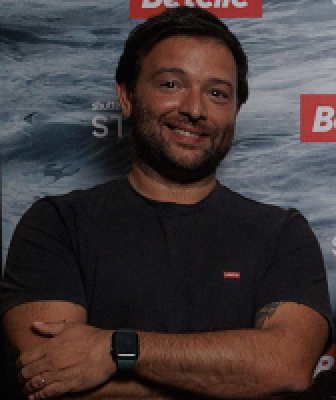
Campaign & Creative Manager
Betclic Group
The sports betting category mostly shouts about odds, payouts, and sign-up bonuses. Betclic is ripping up that playbook. One of Europe's larger sportsbook operators, the brand runs a creative team that behaves more like a small production studio than a marketing department. It produces long-form sports documentaries and mockumentaries that build fan connection and channel real money to the clubs at the center of the stories.
Ricardo Malaquias, Campaign & Creative Manager at Betclic Group, is the architect of that pivot. He spent over a decade in traditional creative agencies, helping shape work for global brands. That experience gives him an eye for what most betting brands miss, and he uses it to compete on craft. The approach is paying off. With his help, Betclic has earned Advertiser of the Year at Clube Criativos Portugal in 2021, 2022, and 2024, and Malaquias has taken home APPM's Marketer Revelation of the Year in 2024.
"Every brand is doing the same thing and talking the same way. We look at Betclic as an entertainment brand and not as a betting company," Malaquias says. The positioning reflects how he thinks about the impulse to wager. He treats it as a fundamental human behavior with roots far older than any sportsbook, and that conviction shapes the brand's documentary slate, where the films cast Portuguese sports figures as the protagonists of full cultural stories.
Stories that defy the odds
Years before Neemias Queta became a household name in basketball, Betclic was already building a documentary around him. The brand started filming during the 2021 offseason, before the Sacramento Kings drafted him as the first Portuguese player ever selected in the NBA. The film follows his improbable rise from a small town outside Lisbon to the league, capturing the moments around the draft. Queta now starts at center for the Boston Celtics, where he won an NBA championship in 2024, and the documentary continues to draw viewers years after its release.
A second project spotlights Ticha Penicheiro, a Portuguese point guard who broke into the WNBA in the late 1990s and became one of the league's most celebrated playmakers across a 15-year career. She held the WNBA's all-time assists record for years and was inducted into the Women's Basketball Hall of Fame in 2024. Betclic's documentary frames her as a generational figure in Portuguese sport, again with no reference to betting anywhere in the runtime.
"We started telling Neemias's story before he was even drafted. The documentary doesn't mention betting once, but it's a defy-the-odds story. He's the first Portuguese player ever to play in the NBA," Malaquias says.
The films work because Betclic stays out of frame. The cuts are clean of logo wipes, odds graphics, and soft pivots to a sportsbook CTA. That restraint is what gives the work cultural credibility, and the practice paid off. By the time the Tó Madeira project came up, Betclic had already proved its documentary model could carry weight, which made greenlighting the brand's most ambitious experiment to date a much easier call.
The hunt for a fictional striker
The Tó Madeira project began with a casual conversation between Malaquias and Luís Franco-Bastos, a popular Portuguese comedian. Both are longtime fans of Football Manager (formerly Championship Manager), the football simulation game whose detailed player database has built a global cult community over two decades. Tó Madeira sits inside that database as one of its most enduring myths. He appeared in the 2001/02 edition as a comically overpowered striker assigned to a small Portuguese club called CD Gouveia, and fans turned him into a virtual superstar before realizing he never existed in real life. The database prank became a 20-year urban legend.
When Franco-Bastos pitched a mockumentary investigation, Betclic greenlit it. The decision points to an underappreciated marketing principle. The strongest cultural campaigns usually activate communities that already exist. Betclic did not invent the Tó Madeira fandom. It tapped 20 years of latent obsession that no other brand had bothered to organize.
"The project wasn't scripted. Luís and his friends had an idea and went to this really small town to try to talk to people and see if this story rang a bell," Malaquias says.
Franco-Bastos showed up in Gouveia with a camera crew and started knocking on doors. Club officials remembered the legend instantly. They had been fielding jersey requests from fans around the world for years, but the club, now in Portugal's lower divisions, never had the resources to act on the attention. The three-episode mockumentary launched on Betclic's YouTube channel, timed deliberately to the global release of Football Manager 26 so the campaign could ride a wave of organic interest the brand never had to pay for.
The cultural payoff arrived almost instantly. Fans flooded social media asking where they could buy a Tó Madeira jersey, and Betclic funded the initial production run so CD Gouveia could sell the shirts and keep every euro of the revenue.
"One hundred percent of the revenue went to the club, and they've made around €50,000 to date. The president told us it covered an entire season for their youth teams: travel to matches, uniforms, the whole operation. For us, it was a mockumentary. For the club, it was transformative," Malaquias says.
The first 200 jerseys sold out within hours. The club has since shipped more than 1,000 shirts to fans across Europe, Asia, and the Americas, and a playful, fictional premise ended up funding an entire season of youth football for a fourth-division club. The structural lesson for marketers is that branded entertainment becomes more durable when it is engineered to produce a tangible asset for a real community. Awareness fades inside a quarter. A jersey on a fan's back, or a uniform on a youth player, keeps the campaign alive long after the media plan ends.
Letting the footage write the brief
That kind of work depends on long-form budgets and deep trust in production partners. Betclic still runs the short, sequential ad units that fill social feeds, including newer placements like TikTok's prime-time-style multi-part formats. But Malaquias approaches documentaries differently. The runtime depends on what the team finds in production.
"If we have material that is good enough to tell a story and if it needs to be a one-hour-long story, we'll produce a one-hour-long documentary. It's all about the story, the craft, our feeling, the director's feeling, and the production company's feeling. It's not something that we choose. It's something that happens," he adds.
That process shaped Tó Madeira itself. The team scoped the project as a 30-minute, two-episode series. As they uncovered more material on the ground, the structure expanded to four episodes before being cut back down to three. "I'm lucky that my manager believes in this kind of content and gets me the budget to do these kinds of projects. Craft is important, but it costs money," he says.
Backing the next generation
The same playbook drives Betclic's work in Poland. The brand partnered with Papaya Films, the country's largest production company, to sponsor its Young Talents competition for emerging directors, with English subtitles built in to reach a global audience.
In Portugal, Tó Madeira funded youth football. In Poland, Betclic budgets help develop the next generation of filmmakers. Both outcomes flow from the same conviction that brands willing to fund cultural infrastructure get something more durable than awareness in return. The pipeline reflects that thinking. Betclic is going to launch a one-hour documentary about a recently retired, well-known futsal player, and Malaquias treats his job as a curation exercise more than a content calendar. "We don't do things just for the sake of doing it. I would rather do one or two really good projects instead of 10 that I'm not proud of," Malaquias says.