All articles
In The AI Era, Brands Are Reframing Authenticity Around Proof Instead Of Polish

Chad Shackelford, Chief Innovation Officer at Team One, believes the next creative advantage will come from visible proof of what’s real.
We built a world that was entirely synthetic, and we purposefully let it break. When it did, the only thing left standing was something undeniably real, which was the product itself.
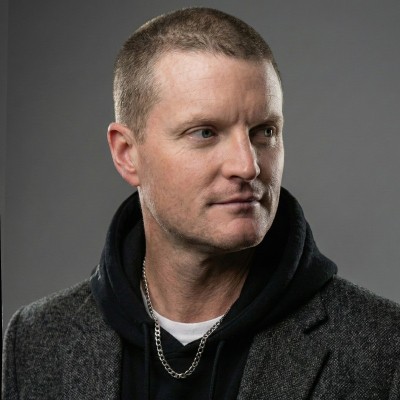
Chief Innovation Officer
Team One
Perfect visuals used to communicate credibility, but in an AI-saturated world they can increasingly communicate the opposite. Generative AI has rapidly compressed the value of cinematic polish by making high-end production aesthetics cheap, fast, and widely accessible. As synthetic media becomes harder to distinguish from reality, audiences are growing more skeptical of anything that looks overly perfected. Some creative teams are starting to accept this shift instead of resisting it, treating AI-generated content as the new baseline rather than the threat itself. In that environment, credibility increasingly comes from visible proof: real-world constraints, hands-on execution, process transparency, and evidence that something tangible actually existed behind the screen.
Chad Shackelford, Chief Innovation Officer at Team One, is approaching the AI production era from a distinctly physical perspective. New to the role, Shackelford brings a career shaped by experiential storytelling, from shooting action-sports films to founding OUTFRONT XLabs and leading work for brands like Google and Coca-Cola. As generative tools make polished visuals easier to replicate, he sees authenticity less as a creative style and more as the result of tangible execution, visible constraints, and giving audiences a clearer view into how something was actually made.
The agency recently explored that same tension in its latest campaign for luxury reseller The RealReal. "We built a world that was entirely synthetic, and we purposefully let it break. When it did, the only thing left standing was something undeniably real, which was the product itself," says Shackelford. The tension between human-first tactile elements and synthetic production is an immediate creative challenge. Shackelford views AI not as a shortcut for speed, but as a mechanism to introduce intentional contrast. "We're using synthetic content to put emphasis on the real aspects of the world. That tension is where the honesty comes from. If AI is doing all the talking, it feels kind of hollow, but if AI is revealing something human, then we can land a point."
Credibility through co-creation
Proving reality often means abandoning the traditional broadcast model. Shackelford advocates for building participatory systems that invite audiences directly into the process. He points to ImagineIfNYC, a real-time co-creation experience he developed alongside Google DeepMind, which used generative media across digital out-of-home screens in New York City. "We're moving into an era where we're asking people to participate more and shape things based on the cultural zeitgeist. It's no longer about a one-way messaging strategy, it's more about a two-way dialogue," he notes. "In these interactive experiences, the technology fades into the background. We're really focused on bringing people together to co-create. The AI is underlying and powering that shared human experience."
Always-on campaigns are not disappearing, but Shackelford believes their role is changing. Rather than carrying the full weight of audience engagement on their own, evergreen campaigns increasingly function as stable foundations audiences can interact with and personalize over time. The evolving media environment also challenges the traditional volume-driven content model. Producing constant output simply to satisfy algorithms becomes less effective when audiences are overwhelmed with synthetic media and fragmented attention spans. Shackelford argues that brands are better served by focusing on work that earns trust through transparency and visible intention rather than sheer quantity. "We're living in a world of infinite content right now. I can create so much content, but the only thing that matters is credibility. Credibility is the filter for what's good and what isn't good."
When audiences are overwhelmed, strict brand adherence matters less than giving them a reason to participate. That realization changes how Shackelford's team defines authenticity. Rather than treating it as a buzzword or a tactic to sprinkle into a brief, he views it strictly as an earned outcome. "A lot of brands treat authenticity as an aesthetic, and they chase it as an aesthetic," he explains. "For us, we look for something real at the center. What's the product truth? What's the behavior? What's the community? What can we tap into that's real and human? That's how you get to authenticity."
Proof over polish
Shackelford believes the next major creative advantage will come from knowing where to place intentional limits. As synthetic production becomes more common across marketing workflows, audiences are starting to look for friction, imperfections, and tangible proof that something real exists behind the finished asset. He uses a simple internal test when evaluating ideas: if the concept only exists inside the campaign itself, it probably is not strong enough. The most credible work, in his view, connects to a real product, behavior, or community that would still hold value even if the marketing never launched.
Those decisions are becoming increasingly operational as brands define what parts of the creative process should remain tactile, visible, or unmistakably human. Questions around disclosure, transparency, and synthetic production standards are already reshaping how organizations think about trust. For Shackelford, the real differentiator is no longer whether AI tools are being used, but where brands consciously decide not to use them. "In an ever-increasing AI-saturated world, the most powerful creative decision you can make is deciding what won’t be synthetic and how you reveal that decision to the world," he concludes.